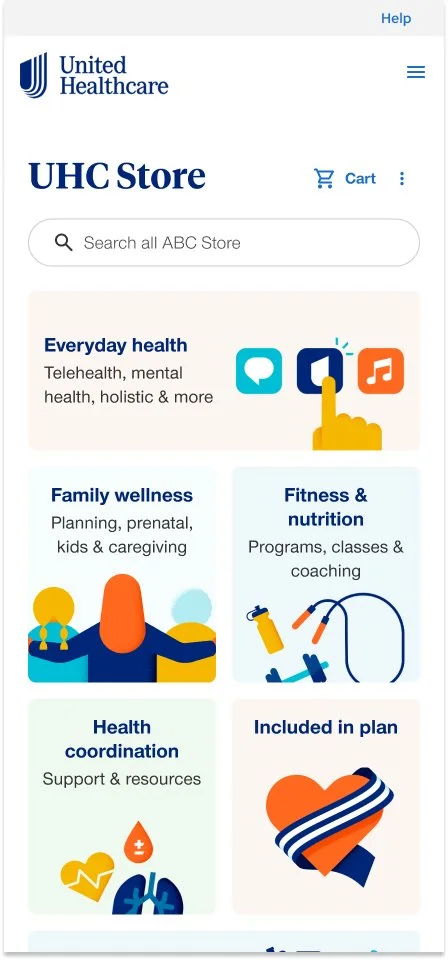
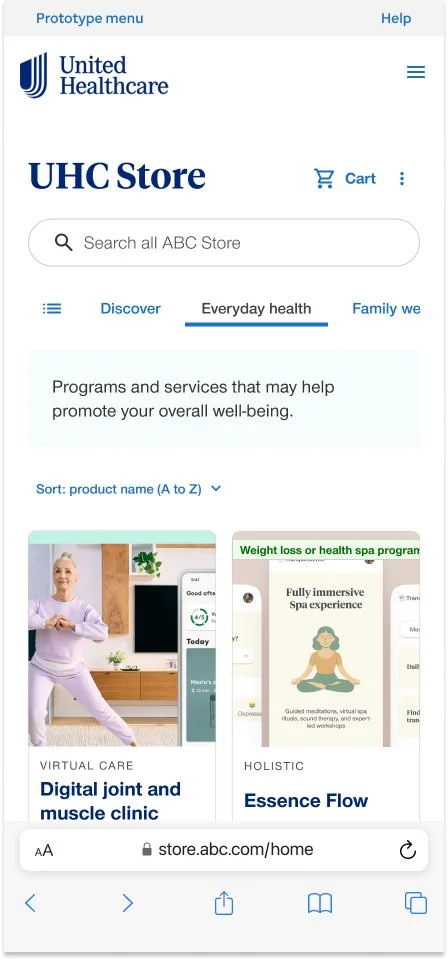
Health Marketplace
The Problem
Fragmented wellness purchasing experience - Members previously navigate multiple platforms or external sites to buy health-related products and manage digital wellness subscriptions.
Limited Plan Personalization - Members receive limited plans to select from during Open Enrollment, chosen by their employers. Typically these plans are paired with wellness programs or products chosen by the employer for their entire population.
Lack of Integrated Wallet - Payment options for claims and other experiences within the UHC member portal did not have a centralized wallet experience. Payment information was fragmented across multiple experiences.
UHC envisioned solving these problems for our core users by creating an UHC Store - an integrated wellness e-commerce platform that leverages the company’s size and partnerships to offer discounted rates on health products that members use every day.
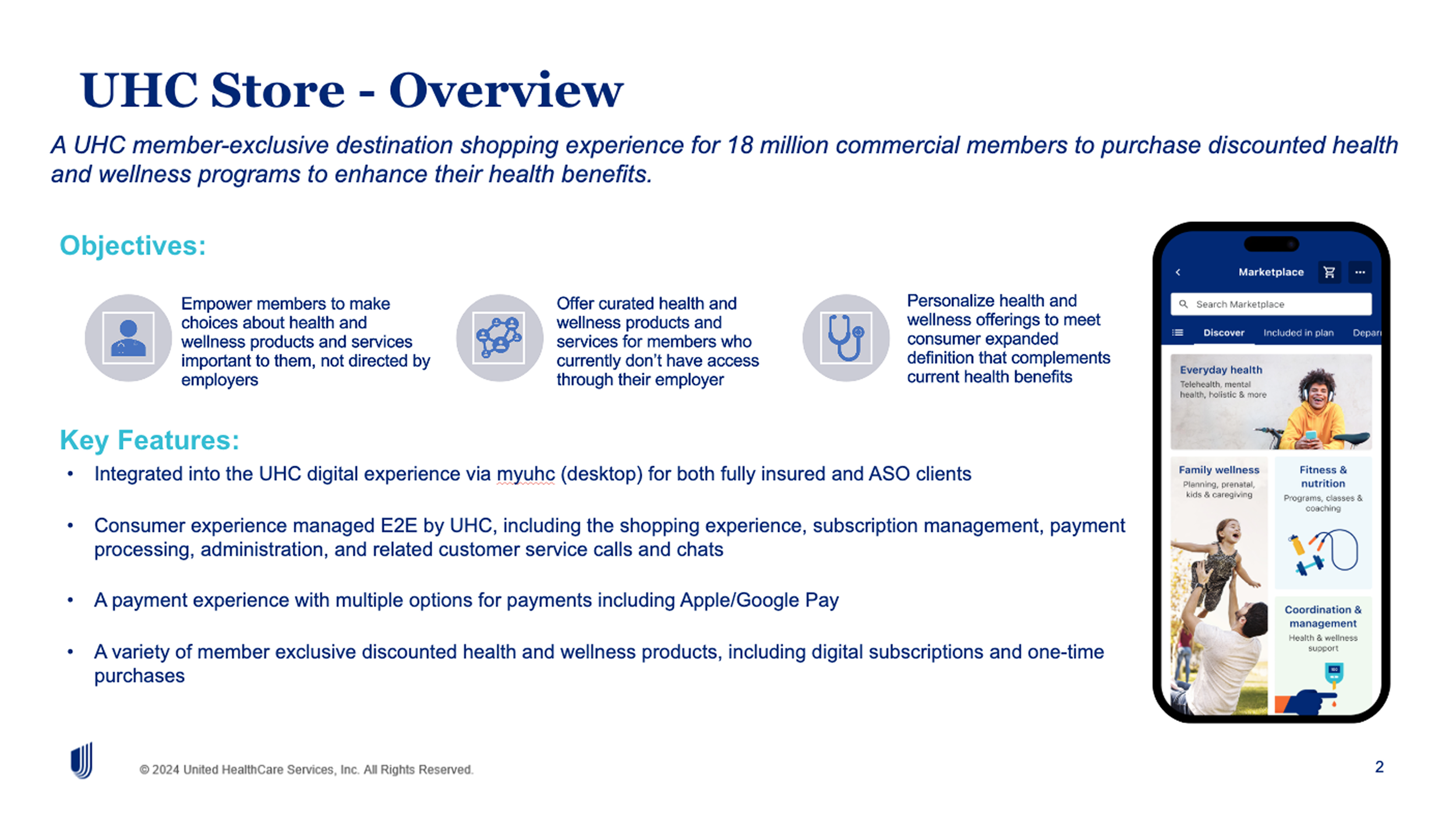
As the design director, I pulled together a team of designers, strategists, and researchers to the project. After thoroughly reading through product requirements, we scheduled a stakeholder workshop to:
Align on look and feel for the experience - By pulling together examples of current e-commerce experiences, we allowed stakeholders to show us what they liked about each.
Confirm the MVP user flow - Leveraging key
Dig into payment platform technical requirements.
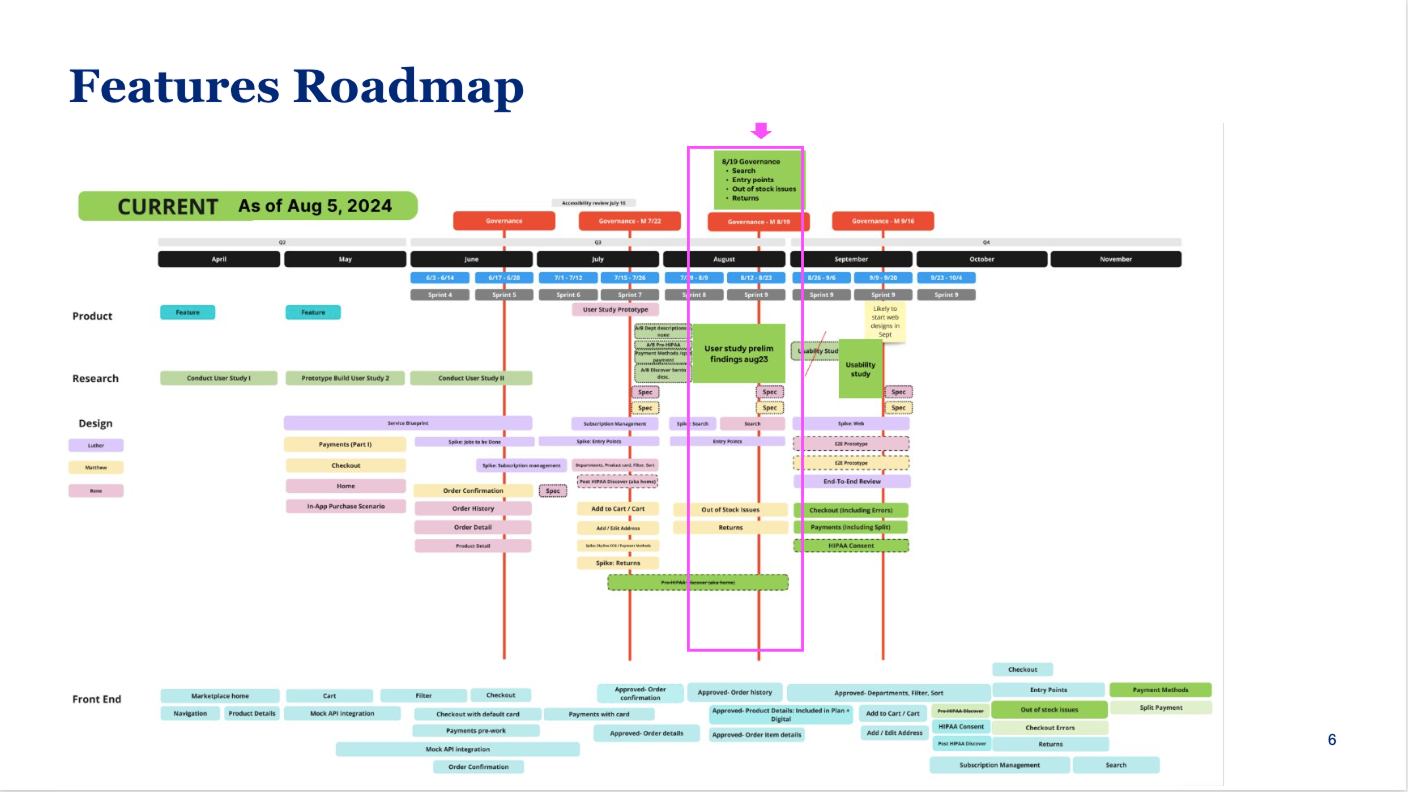
After aligning with stakeholders during the intial workshop, we parsed the user flow into sections and built a delivery roadmap based on feature size. From there, we tested and iterated designs with members while holding bi-weekly stakeholder reviews to continuously complete and handoff designs to our engineering partners. Our final deliverables included a prototype and detailed service design map.
The Process
Initial Workshop FigJam Board

Delivery Roadmap
Site Map
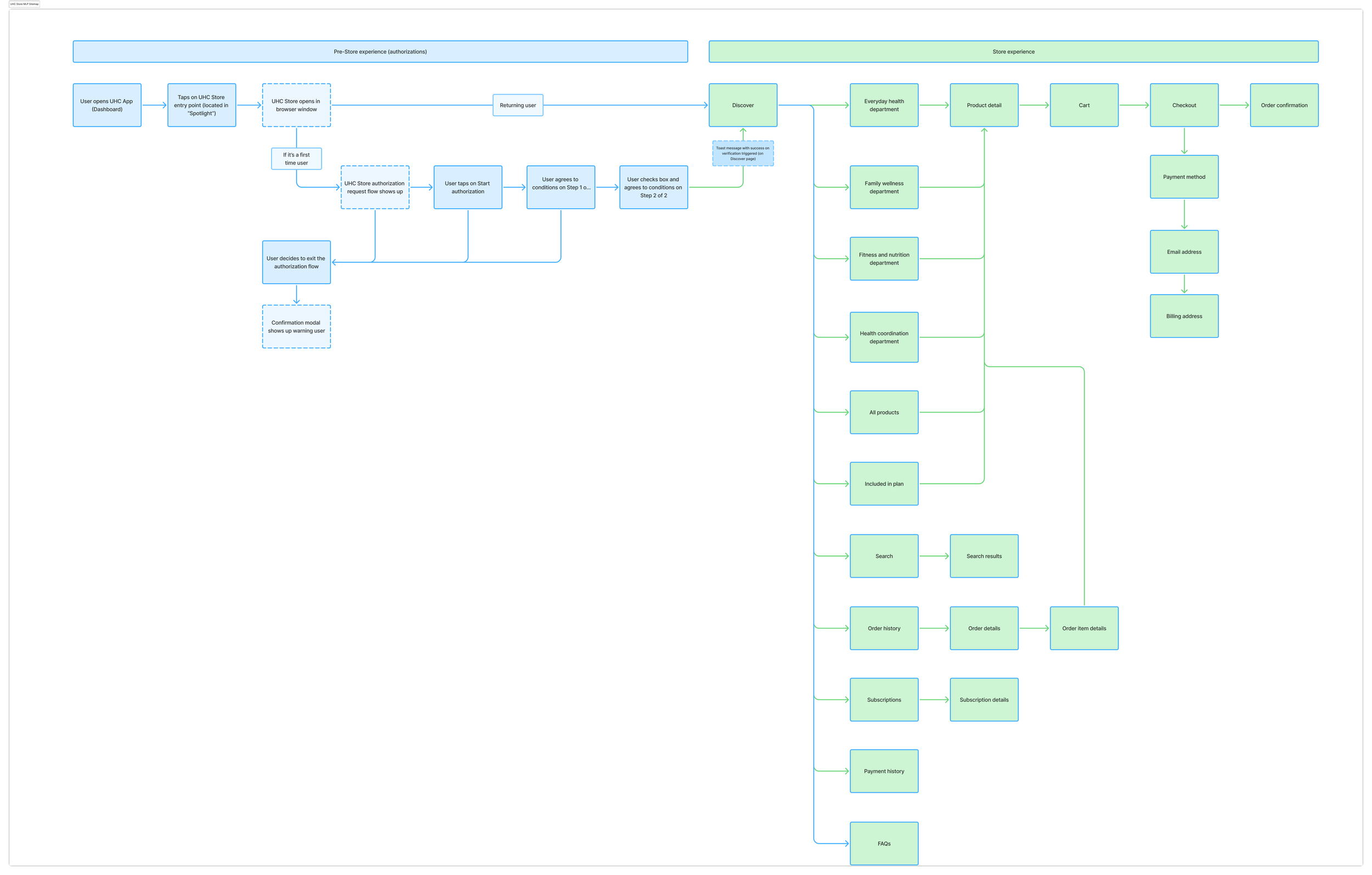
Along the way, we faced many challenges:
No project management support - Due to limited budgets and hiring freezes, my team took on the brunt of project management for their design work. As the lead, I worked with team members to setup up sustainable practices and artifacts for design approvals, stakeholder checkins, and more.
Shift from App to Web - The initial product requirements were for the marketplace to launch within the UHC’s native application for members. However, halfway through our design process, business analysts realized that app sales for digital products would incur large fees from app stores, which would severely tank the business case. We pivoted to a web-only strategy for MVP.
Shift in Payment Platforms - Due to contracting and integration issues with the initial payment platforms, product owners made the tough decision to move to Stripe just before our initial handoff date. Stripes integration patterns were very different from the previous vendor, thus we worked with our product partners to shift our handoff date, gather new requirements, and partner with the Stripe team to finalize designs.
The UHC Store MVP launched to 18 million members in Q4 of 2025, focusing on providing a central wellness e-commerce experience where members can seamlessly purchase discounted products and manage subscriptions on one platform.
Future features include:
Allowing members to personalize their plan by redeeming credits from employers
Integrating all payments into an enterprise digital wallet capability.
Check out the prototype here.